Climbing Sigiriya: Practical Guide to Lion Rock and Pidurangala
A calm, practical guide to climbing Sigiriya in 2026. Compare entry tickets, 1,200 steps, morning heat and whether to pair Lion Rock with Pidurangala.
Climbing Sigiriya is one of the essential mornings of any trip to Sri Lanka. Rising roughly 180 metres above the central plains, Lion Rock holds the fifth-century ruined fortress palace of King Kashyapa I. The walk from the outer moat to the summit passes landscaped water gardens, sheltered cave frescoes, an ancient polished wall and monumental brick paws.
Travellers often wonder whether to climb Sigiriya, neighbouring Pidurangala Rock, or both. Sigiriya has the finest archaeology, water gardens and fifth-century frescoes. Pidurangala offers a low entrance fee, an active monastery trail and a direct view of Lion Rock across the forest canopy. If you have two mornings in the Cultural Triangle, splitting them across separate days is ideal. With only one morning, a private car and driver allows you to pair sunrise on Pidurangala with an early climb at Sigiriya.
What Sigiriya is and what you see on the way up
King Kashyapa I (also spelt Kassapa I) ruled from 477 to 495 CE after seizing the throne from his father. He moved the royal capital from Anuradhapura to this granite outcrop. Following his defeat in 495 CE, Sigiriya served as a Buddhist monastery until the fourteenth century. In 1982, UNESCO inscribed the site on the World Heritage list. The summit rests at 349 metres above sea level.
The ascent moves through five distinct zones:
- Water gardens and boulder gardens: Symmetrical pools, canals and gravity-fed fountains still operate after heavy rain, giving way to shaded boulder caves.
- The frescoes: Halfway up the cliff face, a spiral stair leads to a sheltered pocket holding twenty-one surviving fifth-century paintings of celestial maidens (apsaras). Photography is strictly prohibited.
- The Mirror Wall: Beside the fresco stairs runs a brick wall coated in polished lime glaze, where early visitors from the seventh to tenth centuries scratched verses.
- The Lion's Paws terrace: A northern plateau marks the gate to the upper palace, where two colossal brick paws frame the final staircase.
- The summit palace: The final metal stairway leads to the 1.6-hectare summit, home to ruined foundations of Kashyapa's palace, cisterns and 360-degree views over the Matale plains.
Practical guide to climbing Sigiriya
Climbing the rock requires clear preparation regarding tickets, steps and tropical heat.
Tickets and opening hours
The Central Cultural Fund (CCF) manages Sigiriya. For 2026, foreign adult tickets cost US$35, while children aged six to twelve pay US$20. Children under six enter free. Relief tickets are available for SAARC nationals presenting a valid passport. Fees are converted to Sri Lankan rupees at the CCF internal rate, which fluctuates, so verify current totals on the CCF portal close to travel.
Buy tickets at the counter or online via the CCF portal (valid ninety days; physical collection required at the gate). Drones are prohibited without prior written CCF approval. Ticket counters open daily from 07:00 to 17:00, with site access from 07:00 until 17:30 (last entry 17:00). Confirm opening times locally the day before.
Steps, fitness and morning heat
The ascent involves roughly 1,200 steps, combining stone flights with metal stairs. Estimates vary between 1,200 and 1,270 depending on which garden paths are counted. Flat landings at the boulder gardens, Mirror Wall and Lion's Paws break up the climb. Most active adults reach the top in 45 to 60 minutes. A full visit takes two to three hours.
The path is fitted with sturdy handrails throughout. The main hurdles for anyone uneasy with heights are the open spiral stair to the frescoes and the exposed staircase above the Lion's Paws. In the dry zone, late-morning temperatures regularly exceed thirty degrees Celsius with minimal shade. Reach the gates by 07:00, carry 1.5 to 2 litres of water per person, and wear a sun hat.
Hornets and weather
Colonies of wild hornets (debara) and rock bees nest under cliff overhangs near the Mirror Wall and Lion's Paws terrace. They remain calm unless disturbed by shouting, strong perfumes or high winds. In August 2024, wind disturbed a nest, hospitalising twenty-two visitors and causing a temporary closure. Wire-mesh shelters stand along upper walkways. Keep voices low near warning signs, avoid scented toiletries, and follow staff directions. Check conditions locally before climbing.
Sigiriya remains climbable through most of the year. January to March offers clear mornings and green scenery. June to September is dry and hot, making an early start essential. The north-east monsoon brings afternoon rain between October and December, with showers sometimes lingering into February. Early morning ascents avoid afternoon clouds and rain.
Dress code and the Sigiriya Museum
Sigiriya is an archaeological site, so covered shoulders and knees are not mandatory, though light clothing covering shoulders shields skin from the sun. Wear trainers with good grip, as metal steps turn slick when wet.
The Sigiriya Museum opened in 2009 with Japanese assistance near the western ticket gate. It houses a scale model, fresco reproductions, excavated artefacts and translations of the Mirror Wall poems. Entry is generally included in your foreign ticket. Galleries open around 08:00 and take 30 to 45 minutes to tour. Visiting the cool museum after your morning climb makes a comfortable finish.
Pidurangala Rock: temple, scramble and view
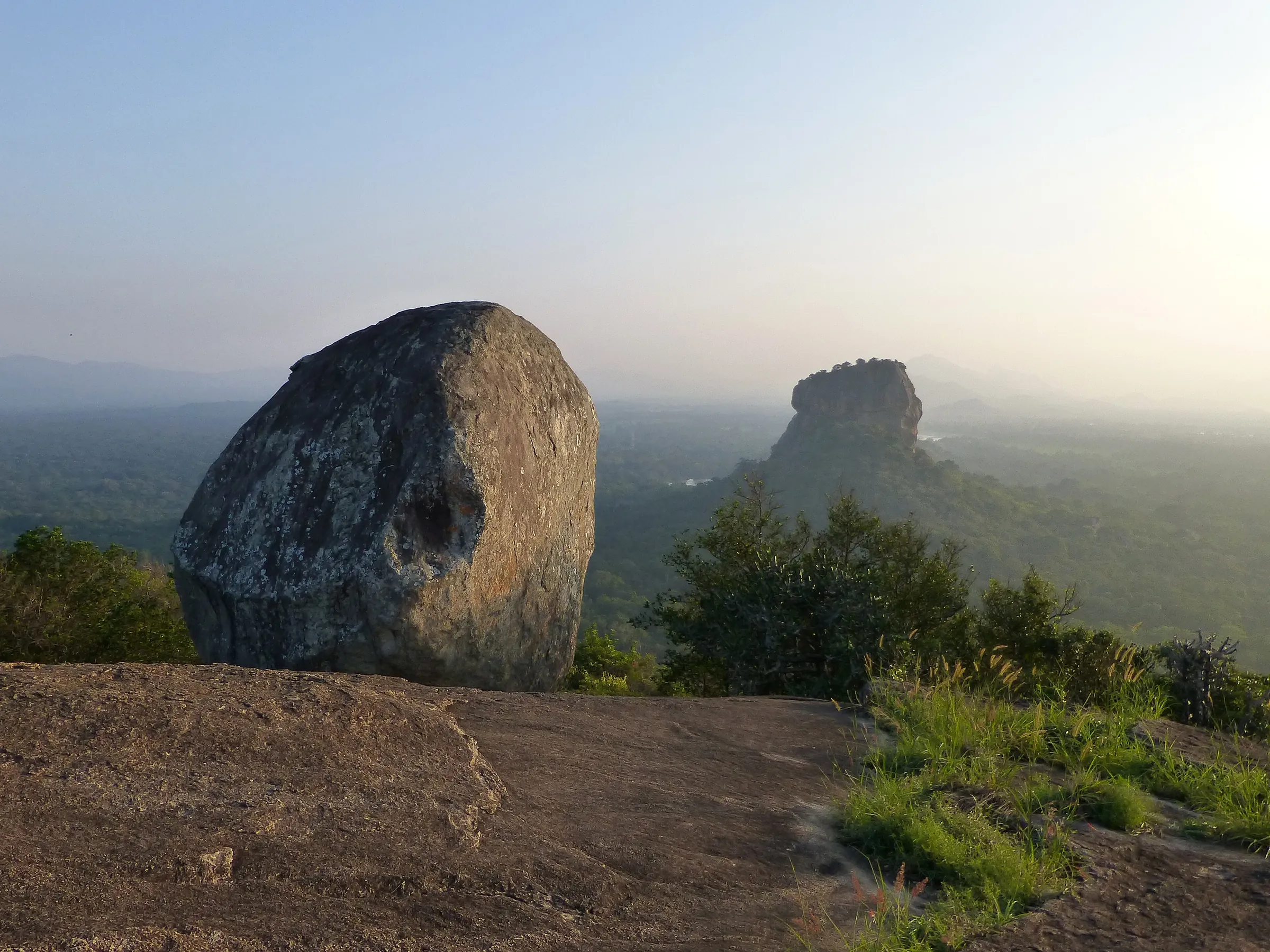
Pidurangala stands one to two kilometres north of Lion Rock, offering the classic panoramic view of Sigiriya from across the forest canopy.
The route begins inside Pidurangala Sigiri Rajamaha Viharaya, an active Buddhist monastery. Admission is LKR 1,000 per adult in cash at the counter (open 05:00 to 18:00 daily). Fees and sarong lending change, so bring cash and your own light wrap. Because you pass an active temple and a reclining brick Buddha in a cave, you must cover shoulders and knees and remove shoes where signposted.
Beyond the temple, over 500 stone steps lead through forest to a boulder zone. The final ten minutes require using both hands to scramble over granite blocks onto an open summit shelf. The climb takes 30 to 45 minutes up and 15 to 30 minutes down (1 to 1.5 hours total). Sunrise is the favoured time for early light on Lion Rock, requiring a head torch for the pre-dawn boulders. Sunset also pairs neatly with a morning visit to Sigiriya.
Sigiriya vs Pidurangala comparison
| Feature | Sigiriya Lion Rock | Pidurangala Rock |
|---|---|---|
| Managing body | Central Cultural Fund (UNESCO site) | Pidurangala temple |
| Foreign adult fee (2026) | US$35 (children 6–12: US$20; museum generally included) | LKR 1,000 (approx. US$3, cash only) |
| Typical hours | 07:00–17:30 (counters 07:00–17:00; confirm locally) | Ticket office 05:00–18:00 |
| Steps and terrain | ~1,200 stone and steep metal steps; railings throughout | 500+ uneven stone steps, then a hands-on boulder scramble |
| Time needed | 2–3 hours (add 30–45 minutes for museum) | 1–1.5 hours round trip (up to 2 hours with sunrise wait) |
| Dress code | No strict rule; modest breathable clothes advised | Shoulders and knees covered; shoes off in temple zones |
| Main draw | 5th-century frescoes, Mirror Wall, Lion's Paws, palace ruins | Direct view of Lion Rock, sunrise light, lower cost |
Suggested half-day plan with a private driver
If you have two mornings near Sigiriya, climb Pidurangala at sunrise on day one and visit Sigiriya at 07:00 on day two. With only one morning for Sigiriya, this timing works smoothly:
- 06:45: Drop-off at the western gate to enter at 07:00 ahead of tour coaches.
- 07:00–09:30: Walk the water gardens, view the frescoes and Mirror Wall, pause at the Lion's Paws, and explore the summit palace.
- 09:30–10:15: Visit the Sigiriya Museum before meeting your driver for chilled water and breakfast.
To tackle both in one morning, start Pidurangala at 05:00 for sunrise, descend by 07:15, and transfer ten minutes to Sigiriya by 08:00. This morning covers over 1,700 steps and takes five to six hours.
Nearby sights and fitting Sigiriya into a Cultural Triangle route
After resting through midday heat, two stops fit naturally into your afternoon:
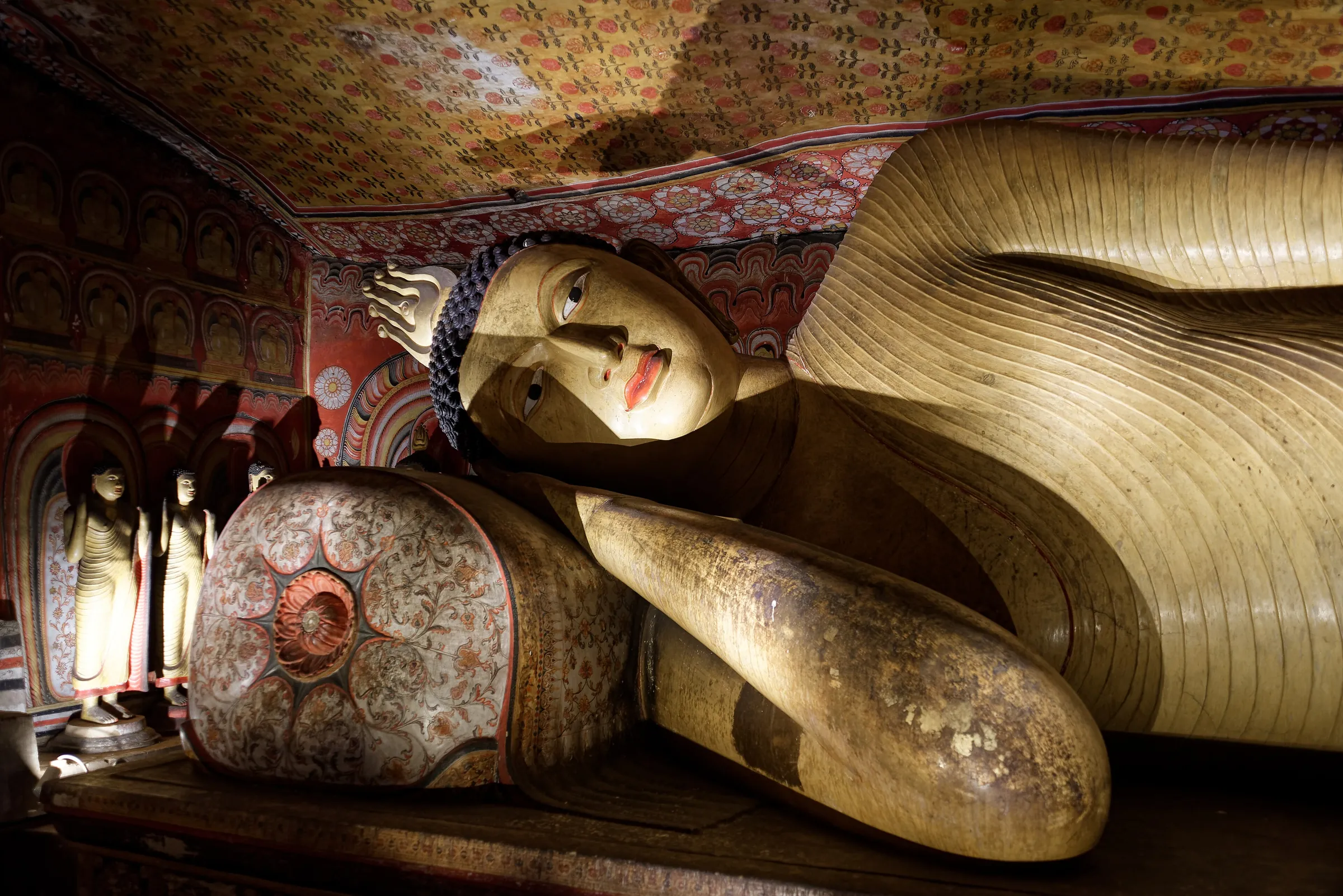
- Rangiri Dambulla Cave Temple: Located 18 to 20 kilometres south-west of Sigiriya (25 to 30 minutes' drive), this UNESCO World Heritage Site holds five cave sanctuaries under a granite ridge. Inside are 157 statues and 2,100 square metres of painted Buddhist murals. The climb involves 150 to 200 stone steps. Arrive from 15:30 as rock cools. Cover shoulders and knees, and bring thick socks for the sunny courtyard.
- Minneriya National Park: Roughly 23 kilometres from Sigiriya (30 to 45 minutes by car), Minneriya is run by the Department of Wildlife Conservation. Between May and October, receding waters attract up to 300 Asian elephants during the annual Gathering, peaking August to October. Afternoon safaris depart around 14:30 or 15:00. Herds shift between Minneriya, Kaudulla and Hurulu Eco Park, so verify where elephants are gathering on the day.
With a private car and chauffeur-guide, Sigiriya serves as a base for two or three nights near Habarana, Sigiriya or Dambulla:
- Colombo Airport (CMB) to Sigiriya: 144 to 146 km (2.5 to 3.5 hours).
- Dambulla to Sigiriya: 18 to 20 km (25 to 30 minutes).
- Polonnaruwa to Sigiriya: 55 to 56 km (1 to 1.25 hours).
- Kandy to Sigiriya: 88 to 91 km (2 to 3 hours).
Roadworks, rain or festival traffic can add half an hour. Travellers spend two or three nights here before heading south to Kandy and the hills. Read our destinations guide, or view journeys like The Cultural Triangle, Sigiriya Rock Weekend, or Central Wonders.
We can plan this route around your dates, pace and preferred hotels. Explore route ideas with our AI trip planner, or message our team on WhatsApp to check options and availability.
Questions people ask
How many steps are there when climbing Sigiriya?
The climb from the water gardens to the summit involves roughly 1,200 steps, with estimates up to 1,270 depending on which paths are counted. The ascent combines stone stairs with metal flights fitted with solid handrails. Wide terraces at the boulder gardens, Mirror Wall and Lion's Paws provide level pauses along the way.
Is Pidurangala Rock harder to climb than Sigiriya?
Pidurangala is shorter, with roughly 500 stone steps taking 30 to 45 minutes to ascend. However, the final stretch requires a hands-on scramble across large boulders that demands good balance. Sigiriya has 1,200 steps and takes longer, but its stairs are fully maintained with handrails the whole way.
Can you climb both Sigiriya and Pidurangala in one morning?
Yes, because the two rock entrances are only one to two kilometres apart, about five to ten minutes by car. You can begin Pidurangala at 05:00 for sunrise, descend by 07:15, and enter Sigiriya around 08:00. This requires five to six hours and more than 1,700 steps, so splitting them across two mornings is much more relaxing if time permits.
What should you wear when climbing Sigiriya?
Light, breathable clothing and trainers or walking shoes with good grip are ideal. Sigiriya is an ancient archaeological site rather than an active temple, so religious dress rules do not apply, though covering shoulders helps prevent sunburn. If you also visit Pidurangala or Dambulla Cave Temple on the same day, you will need covered shoulders and knees to enter the active Buddhist grounds.